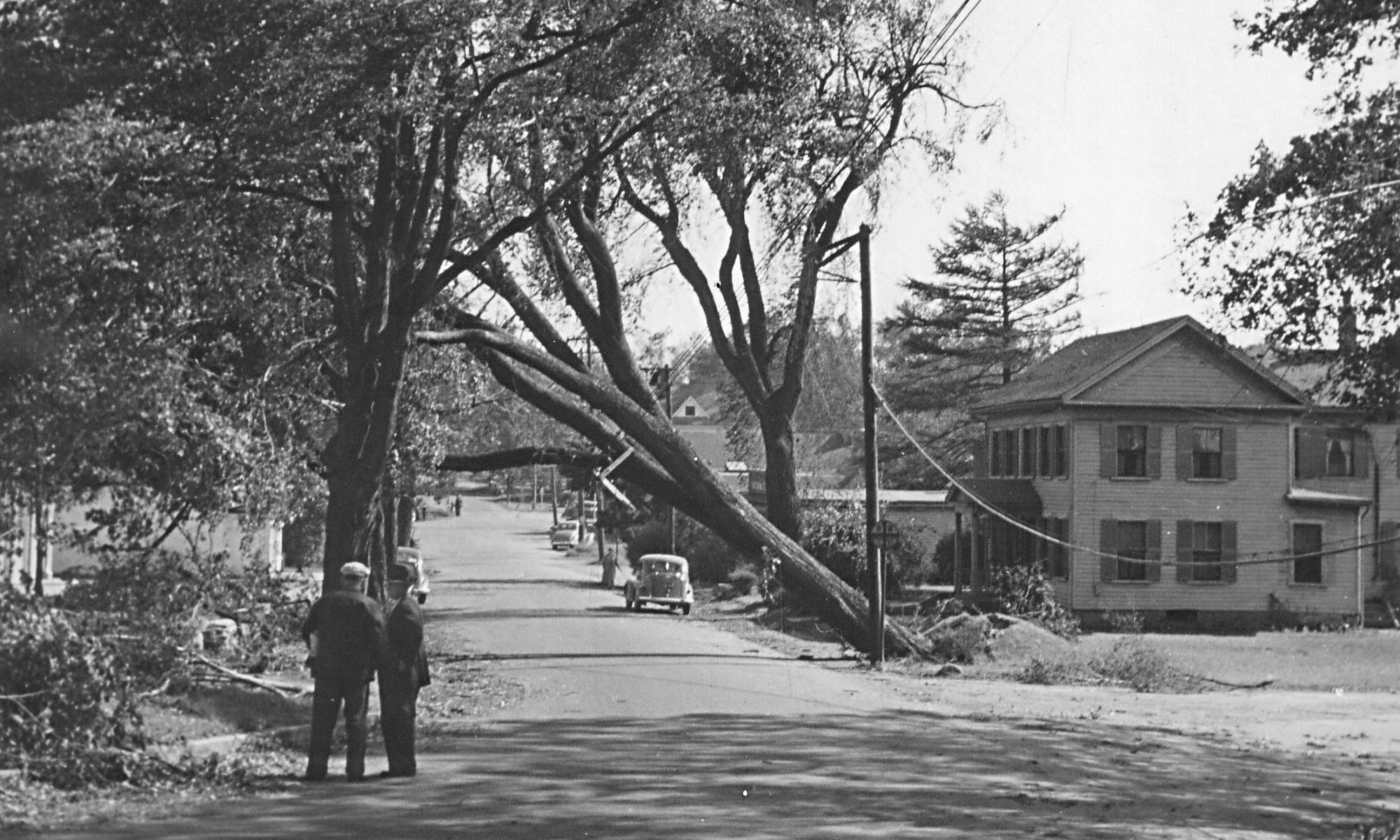
Yesterday as I was setting up our library in the new History and Arts Center at Fayville Hall, I came across a dainty pocket-sized volume (two in fact!) with hand tinted etchings:
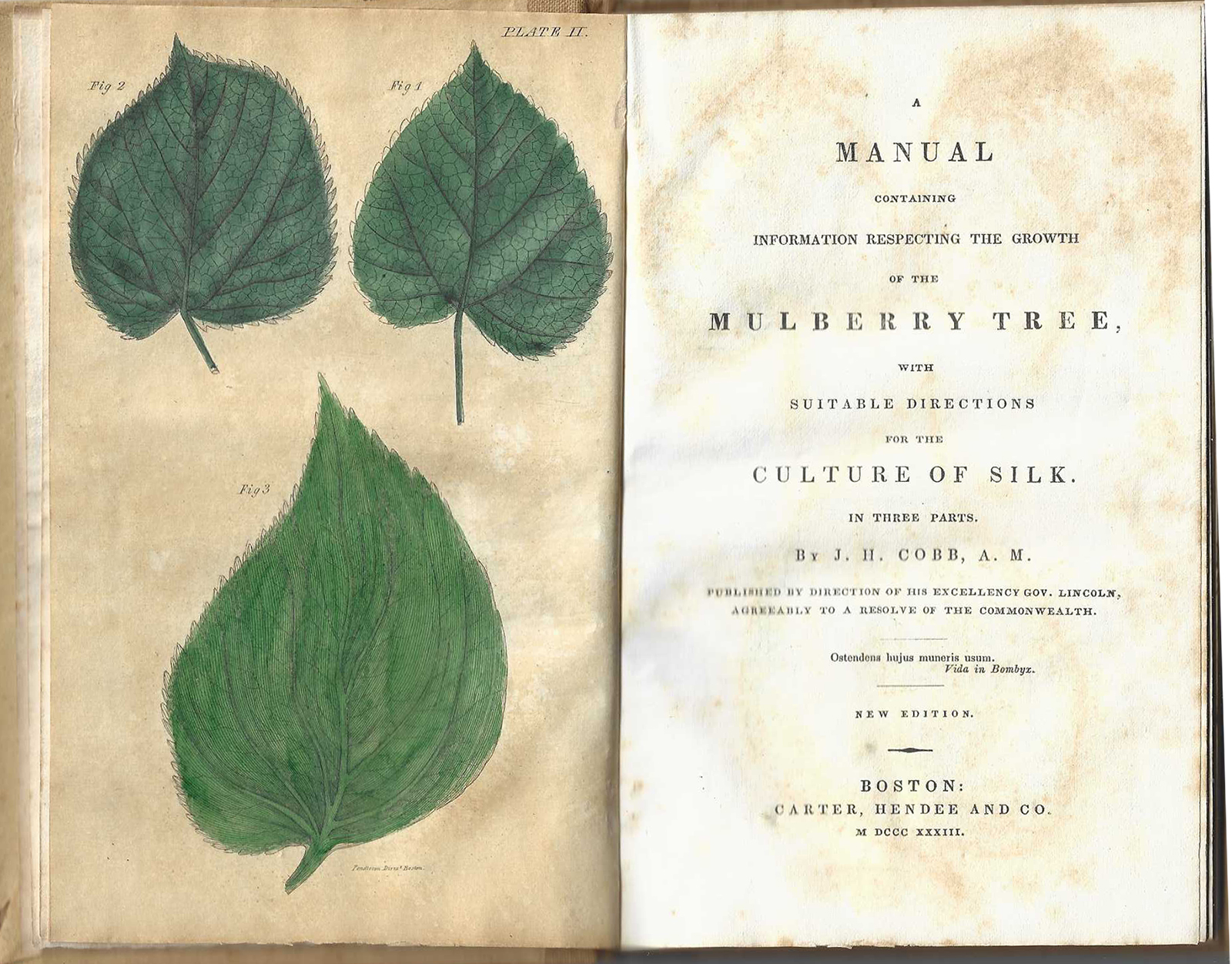
Why would we have these in our collection? Well, though it’s hard to remember these days with all the suburban development, in the 19th century Southborough comprised the second richest agricultural region in the state. Then as now, silk was considered a luxury fabric, and American entrepreneurs were eager to break Europe’s and Asia’s dominance in silk production. Massachusetts saw a surge of interest in sericulture—the cultivation of silkworms and the mulberry trees they feed on—driven by the promise of high profits from domestic silk production.
The craze was ignited in the 1830s by the introduction of a new species of mulberry, Morus multicaulis, from China. This variety was promoted as superior due to its rapid growth and large, accessible leaves, which were ideal for feeding silkworms and promised to reduce labor costs dramatically. Nurserymen in Massachusetts, Connecticut, and New York began growing mulberry trees in vast quantities to meet the burgeoning demand.
The mulberry market quickly turned speculative. Prices for young mulberry trees soared, with some selling for up to $5 each—a huge sum compared to other tree species at the time. Stories circulated of investors making thousands of dollars in profit in a single season, fueling a frenzy akin to the Dutch tulip mania of the early 1600s. Nurseries in Massachusetts and elsewhere sold hundreds of thousands of trees annually, and even prominent figures like Daniel Webster invested in the trend. (You’ll note the book in question was sanctioned by our then-Governor, Levi Lincoln Jr.)
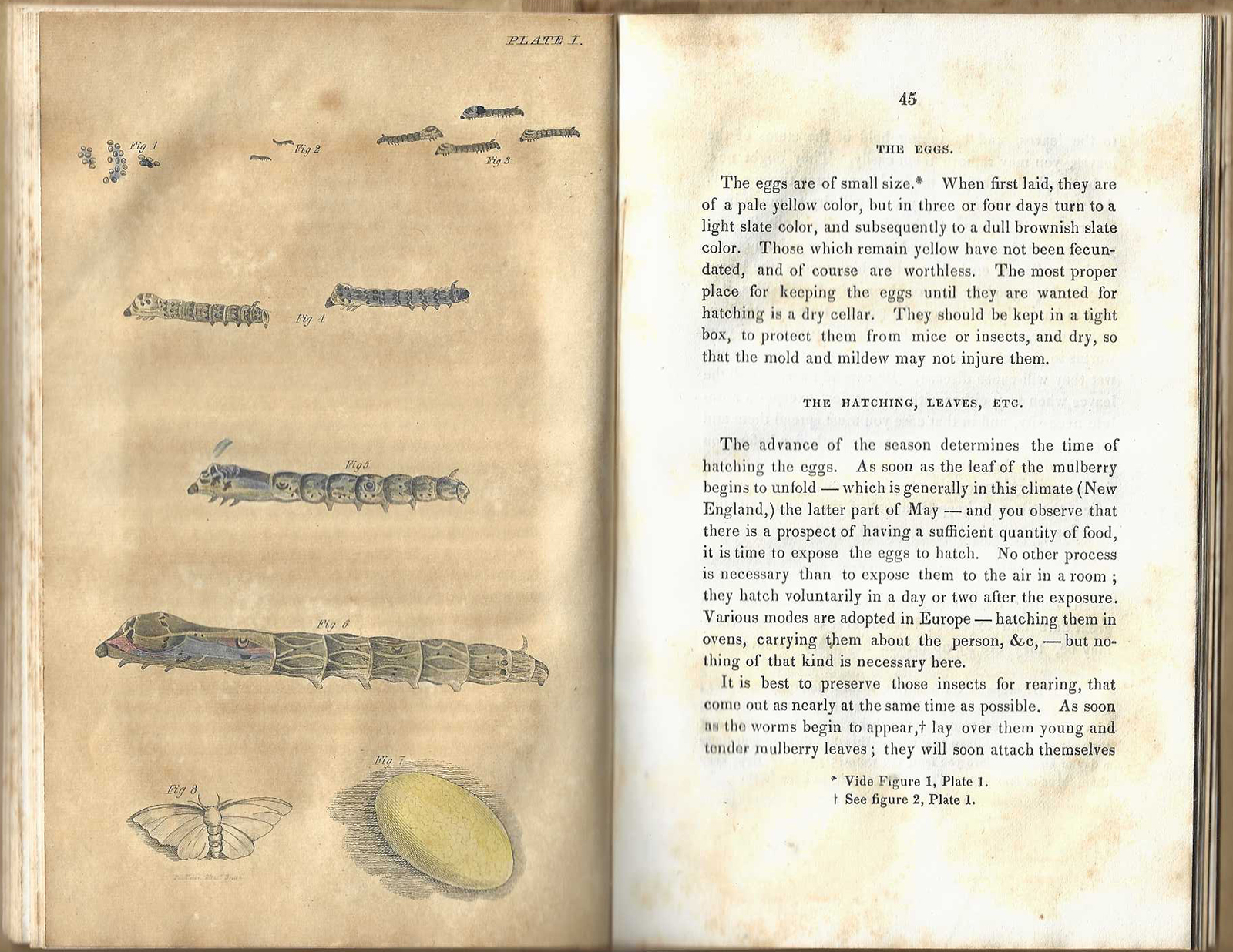
Despite the initial optimism, the scheme was fundamentally flawed. The Morus multicaulis mulberry proved ill-suited to New England’s climate, suffering from harsh winters and, eventually, a fatal blight in 1844 that devastated the trees. Moreover, the process of raising silkworms and producing silk was far more labor-intensive and complex than anticipated, requiring meticulous household care rather than scalable industrial processes. By 1839, the bubble burst: prices for mulberry trees collapsed, and many investors were left with worthless stock.
The failure of the mulberry and silk mania did not spell the end of silk in New England. While local sericulture faded, some entrepreneurs shifted to importing raw silk and focused on manufacturing, eventually building some of the largest and most successful silk mills in the United States. In Massachusetts, the initial utopian aspirations of local silk production gave way to a more pragmatic reliance on imported raw materials, paving the way for a robust manufacturing industry in places like Northhampton that lasted until the Great Depression.
So who were our prospective silk farmers in Southborough? We don’t know, but the fact that we have two of these rare books speaks volumes about our former inhabitants’ desire to participate in this get-rich-quick scheme.
Finally, at the top I mentioned setting up the library in Fayville Hall. Yes, folks, we are getting that close! We’re hoping for a September 12th opening, if the required permitting falls our way. I’ll be in touch with more news shortly!